
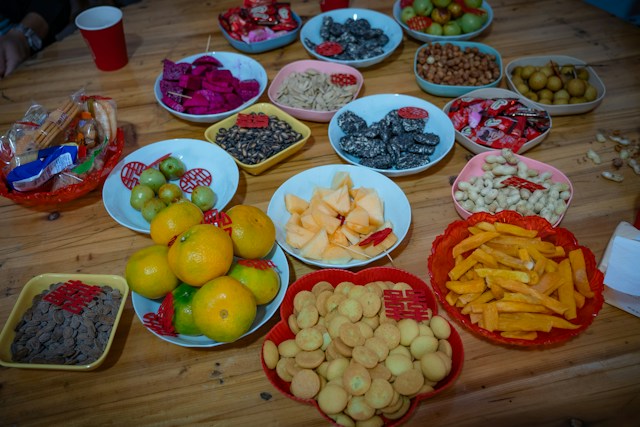
ASIACOMMERCE - Hamper suppliers, corporate gift companies, and retailers in Malaysia and the Philippines often import food from China for hampers, especially before festive seasons.
Nuts, cookies, festive sweets, and dried goods fill many of the hampers sold for Chinese New Year, Hari Raya, and Christmas.
However, a hamper is only as good as its weakest item.
One expired snack or one doubtful halal label can spoil the whole gift.
Short answer: Yes, you can import food from China for hampers in Malaysia or the Philippines.
The key is choosing items with long enough shelf life, proper labels, and recognised halal status where needed, then ordering early because festive dates never move.

Why Do Suppliers Import Food from China for Hampers?
Festive hampers are a big seasonal business.
In Malaysia, people search for "Chinese New Year hamper" about 1,600 times a month, based on Ubersuggest estimates checked in November 2026.
In the Philippines, searches for "Christmas basket" climbed from about 590 in August 2025 to 9,900 in December 2025, the same data shows.
Meanwhile, Chinese factories produce many classic hamper items, such as gift-tin cookies, roasted nuts, dried fruit, and festive candies.
In addition, many of them offer festive packaging in red and gold designs.
For the wider rules and product range, see our pillar on how to import food from China.
Which Items Work Best When You Import Food from China for Hampers?
Most hamper ranges combine a few groups.
| Item group | Examples | What usually matters most |
|---|---|---|
| Nuts and dried fruit | Roasted cashews, pistachios, dried mango | Freshness, sealed packs, and moisture control |
| Biscuits and cookies | Gift-tin cookies, egg rolls, wafers | Shelf life and breakage protection |
| Festive sweets | Candies, chocolates, nougat | Heat resistance and halal status |
| Dried goods and tea | Mushrooms, seaweed, tea gift boxes | Premium look and clear labels |
For tea and drink items, our pillar on how to import beverages from China adds more background.
Why Does Shelf Life Matter So Much in Hampers?
A hamper is packed weeks before it is sold, and often kept for weeks after it is received.
For that reason, every item needs a date that covers the whole season with room to spare.
In practice, the item with the shortest date decides the life of the whole hamper.
Humid weather in Malaysia and the Philippines also tests packaging, so sealed packs matter.
When you import food from China for hampers, matching dates across all items is part of the product.
Our guide to sourcing packaged snacks from China explains the wider quality side.
How Do Halal and Labels Affect Hampers in Malaysia?
Many corporate and Hari Raya hampers go to Muslim recipients.
Therefore, food items in those hampers need halal certification that JAKIM recognises.
Enforcement on halal logos is active.
In July 2026, KPDN seized more than 31,000 detergent units carrying a suspected unauthorised halal logo in Seri Kembangan, Malay Mail reported.
Similarly, each food item still needs proper labels, even inside a gift box.
In the Philippines, many processed foods need Food and Drug Administration registration and proper labels before sale.
So if you import food from China for hampers, check halal status and labels before you design the box.
When Should You Order Hamper Food for 2027?
Early 2027 is a crowded season.
Chinese New Year falls on 6 February, Ramadan is expected to start on 8 February, and Hari Raya Aidilfitri is expected on 10 March, SAYS reported in October 2026.
At the same time, many Chinese factories slow down around their New Year holiday.
As a result, if you import food from China for hampers for both seasons, confirm items well before the break.
For Christmas baskets in the Philippines, demand climbs from September, so mid-year planning works best.
How AsiaCommerce Helps You Import Food from China for Hampers
A hamper order involves many items, several factories, halal documents, labels, and fixed festive dates.
If one item is late or rejected, the whole hamper waits.
AsiaCommerce, experienced in export and import since 2016, runs the procurement so you can focus on your customers.
Our team helps you import food from China for hampers by sourcing suitable factories, checking the goods, and coordinating official import in line with regulations.
Here is how it works:
- Send us the product link or your product requirements.
- Receive a full cost breakdown up to delivery, including shipping, duties, and import taxes.
- Make your payment.
- Our team purchases and checks the goods, then imports them officially in line with regulations.
- The goods arrive at your business address.
You can also learn more about our import procurement solution and our quality inspections.
Chat with Our Team on WhatsApp About Your Hamper Order
FAQ: Import Food from China for Hampers
Do hamper food items need halal certification in Malaysia?
Items for Muslim recipients should carry halal certification that JAKIM recognises.
Each item also needs proper labels.
How long should hamper food last?
Long enough to cover the selling season and the weeks after the gift is received.
The shortest-dated item decides the life of the hamper.
Can I import food from China for hampers from several factories?
Yes, many suppliers combine snacks, sweets, and dried goods from different factories into one shipment.
Each item still needs its own checks and documents.
Can I add branded bags or boxes to hamper orders?
Yes, many hamper suppliers add printed packaging or reusable bags.
Our guide to corporate gift bags from China covers that side.
When should I order hamper food for Chinese New Year 2027?
Confirm items and samples well before the factory holiday in early February.
That leaves time for production, checks, and shipping.
AsiaCommerce is a China sourcing and procurement partner for businesses in the Philippines, Malaysia, and Indonesia.
AsiaCommerce: Cross-Border Supply Chain Enabler for Southeast Asia