
ASIACOMMERCE — Analyzing the Philippines Market Trends 2026 reveals a nation rapidly transforming into a sophisticated high-tech manufacturing hub for global trade.
As the official ASEAN Chair for 2026, the Philippines is now a central pillar for regional supply chain stability.
International business owners are increasingly looking at this archipelago as a prime entry point into the broader Southeast Asian market.
(RELATED CONTENT: 8 New EV Fast-Charging Hubs to Launch: Why Global Tech Manufacturers Must Enter the Asian Supply Chain Now)The current economic landscape suggests that the Philippines will maintain one of the fastest GDP growth rates in the neighborhood.
This surge is primarily driven by a massive transition toward sustainable technology, smart manufacturing, and high-value agricultural exports.
Understanding these Philippines Market Trends 2026 is essential for any global brand aiming to capture a share of this prosperity.
The AI and Electronic Hardware Renaissance
One of the most significant Philippines Market Trends 2026 is the total dominance of the semiconductor and electronics sector.
(RELATED CONTENT: How China Cosmetic Brands Use AI to Dominate the 2026 Southeast Asian Digital Market)Currently, electronic components account for nearly 59% of the nation's total exports, focusing heavily on AI and IoT hardware.
Global tech firms are increasingly sourcing integrated circuits directly from Manila’s industrial clusters to feed the worldwide demand for automation.
This trend is supported by the government’s "CREATE MORE" initiative, offering massive tax incentives for innovation-focused global projects.
Consequently, the Philippines has moved beyond basic assembly into high-level processing of mineral resources like copper and nickel.
These minerals are critical for the global electric vehicle battery supply chain, placing the Philippines at a strategic global advantage.
(RELATED CONTENT: Why Thailand Skincare Brands Are the Most Profitable Supply Chain Investment for Global Retailers in 2026)Green Energy: The New Frontier for Global Importers
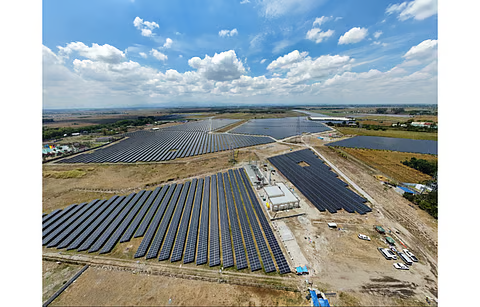
A pivotal shift in Philippines Market Trends 2026 is the aggressive pursuit of renewable energy and sustainable infrastructure projects.
The government has prioritized solar and wind energy, aiming for a 35% renewable share in the national power mix.
Significantly, the energy sector now allows for 100% foreign ownership, a rare and lucrative opportunity for international technology providers.
Demand for solar panels, smart grid management, and battery energy storage systems (BESS) has reached an all-time high this year.
Global suppliers of green technology can find a "hunger" for modern infrastructure as the nation modernizes its provincial power grids.
This sector offers high-margin potential for businesses that can provide advanced energy solutions to a rapidly urbanizing population.
Agribusiness and Luxury Consumer Demand
Despite the tech boom, the Philippines Market Trends 2026 show that modern agriculture remains a remarkably stable investment sector.
The demand for high-quality processed foods and organic wellness products is growing at a double-digit rate among the middle class.
Importers are finding success by supplying the Philippine market with premium dairy, wheat, and sustainable fashion from global brands.
Conversely, sourcing tropical fruits and coconut derivatives from the Philippines has become more efficient through improved cold-chain logistics.
This two-way trade flow ensures that the market remains liquid and resilient against global inflationary pressures and climate challenges.
Ultimately, the Philippines serves as a regional showcase, signaling that demand for sustainable technology is set to explode everywhere.
Scaling Your Global Brand Through the Philippines Market Trends 2026
The shift toward electric mobility and smart infrastructure is inevitable, and being positioned correctly in Asia today defines tomorrow.
However, entering the Southeast Asian market involves navigating a labyrinth of regional trade certifications and complex government-led procurement cycles.
Many global business owners face significant hurdles when trying to align their products with regional safety standards and import regulations.
Without local expertise, your high-tech components might face border rejections or fail to meet the specific requirements of regional authorities.
Whether you are sourcing semiconductors or importing green energy hardware, the birocratic "red tape" can be an overwhelming business barrier.
AsiaCommerce acts as your strategic bridge, ensuring that every component you supply meets the necessary compliance standards for immediate acceptance.
We help you navigate the intricate landscape of regional trade, turning complex cross-border logistics into a seamless expansion for your brand.
For those looking at marketplaces like 1688 or Taobao, we handle the restricted payment systems that typically block international buyers.
Instead of struggling with bank transfers or local legalities, you can focus on innovation while we handle the operational complexities.
Our team provides transparent cost calculations and rigorous quality control to ensure your global supply chain remains uninterrupted and safe.
Ready to capitalize on the Philippines Market Trends 2026?
Consult for FREE with our global trade experts via WhatsApp: 0881-0279-17576.
Follow AsiaCommerce on social media and stay tuned to our website for more viral insights into the global trade revolution. (*)
AsiaCommerce: Cross-border Supply Chain Enabler for Southeast Asia
0 Comments