
Author: AsiaCommerce Sourcing Research Team
Role: Cross-Border Sourcing and Import Specialist, AsiaCommerce
Publish Date: August 28, 2026
ASIACOMMERCE - Businesses that source products from China in 2026 can access one of the world's deepest manufacturing ecosystems.
However, successful sourcing now requires much more than finding a low-priced supplier and requesting a quotation.
Buyers must evaluate factories, specifications, quality systems, compliance, logistics, payment terms, and total landed costs before ordering.
Since 2016, AsiaCommerce has supported cross-border procurement through PT Exim Jaya Abadi and PT Kalimas Mitra Perkasa.
Why Global Businesses Source Products From China in 2026
China remains a major sourcing hub because its supplier ecosystem combines scale, specialization, infrastructure, and broad production capabilities.
In 2025, China's total goods trade reached approximately USD 6.36 trillion to USD 6.48 trillion.
Moreover, merchandise trade exceeded 25 trillion yuan during the first half of 2026 and continued the previous year's momentum.
Mechanical and electrical products generated more than 60% of exports and reached 9.36 trillion yuan during H1 2026.
Meanwhile, high-technology exports accelerated as global demand grew for semiconductors, data centers, and artificial intelligence infrastructure.
Industrial robotics also gained importance, with exports reportedly rising 48.7% as China became a net exporter.
However, strong national figures do not mean every factory or industrial segment offers the same opportunity.
China's official manufacturing PMI fell to 49.2 in July 2026 after reaching 50.3 in June.
By contrast, the private RatingDog PMI reached 50.9 and showed stronger resilience among private, export-oriented manufacturers.
Therefore, global buyers should assess individual suppliers instead of treating China's manufacturing sector as one uniform market.
Regional diversification also makes Southeast Asia increasingly important for companies that build supply chains around Chinese manufacturing.
China's exports to ASEAN grew 13.4% in 2025 and accelerated above 20% during the first quarter of 2026.
Furthermore, RCEP and the China-ASEAN trade framework support deeper commercial connections across regional supply chains.
These conditions create opportunities for brands that combine Chinese manufacturing capacity with growing Southeast Asian consumer markets.
Yet buyers still need clear product requirements, compliance plans, target margins, and realistic sales forecasts before ordering.
Businesses should also decide whether they need standard products, customization, private labeling, or original equipment manufacturing.
(ALSO READ: Launching a Cosmetics Brand Across Indonesia, Malaysia, and the Philippines: What Changes at Each Border)AsiaCommerce translates these commercial objectives into measurable sourcing requirements through its cross-border experience since 2016.
How to Source Products From China Step by Step
A successful China sourcing project starts before buyers contact factories because unclear specifications often create expensive problems later.
First, define product specifications, target costs, expected volumes, packaging, compliance requirements, and acceptable production tolerances.
Next, identify supplier candidates through B2B platforms, industrial clusters, trade fairs, referrals, or professional sourcing networks.
However, never treat platform visibility, badges, or polished profiles as proof that a supplier can handle your project.
Buyers should confirm the legal company name, business license, operating address, production scope, ownership structure, and export experience.
Then, determine whether each candidate operates as a manufacturer, trading company, or hybrid business.
Each model offers different advantages in pricing, flexibility, communication, production capacity, and access to multiple product categories.
After verification, send every shortlisted supplier the same specification sheet and request comparable quotations.
Compare unit prices alongside tooling, packaging, sampling, testing, payment terms, MOQ, lead time, and Incoterms.
Moreover, ask suppliers which costs could change after sampling or following movements in raw material prices.
Next, evaluate samples against measurable standards rather than visual impressions or informal approvals through messaging applications.
A golden sample can establish a shared benchmark for materials, dimensions, colors, packaging, finishing, and performance.
Before mass production, document inspection criteria, defect limits, delivery dates, payment milestones, and remedies for non-conforming goods.
During production, milestone inspections can expose material changes, workmanship problems, or delays before factories complete the entire order.
Finally, inspect finished goods before shipment and confirm quantities, labeling, packaging, workmanship, and agreed product requirements.
International buyers should also check destination-country customs, certification, registration, labeling, and testing requirements before shipment.
Furthermore, record every approved specification change in writing so factories receive one clear version of the instructions.
AsiaCommerce coordinates supplier search, verification, inspection, shipping, and regional distribution through one connected sourcing workflow.
Verify Suppliers Before You Source Products From China
Supplier verification matters because a convincing digital profile does not prove legal legitimacy or genuine manufacturing capability.
Therefore, buyers should never use marketplace badges as substitutes for independent legal and operational checks.
Start by confirming registration details, factory locations, production equipment, staffing, certifications, manufacturing processes, and export history.
(ALSO READ: How Global Cosmetics Brands Win on Shopee, Lazada, and TikTok Shop in Southeast Asia)An on-site factory audit can show whether a supplier actually produces goods at the location presented during negotiations.
However, international buyers must conduct verification lawfully and respect current Chinese rules covering supply-chain investigations and information requests.
The 2026 sourcing environment brings additional regulatory sensitivity around supply-chain security and certain cross-border compliance investigations.
Consequently, companies should design sensitive audit questionnaires carefully and seek professional guidance when legal uncertainty exists.
Quality control must also continue after a supplier passes the initial verification stage.
One reported risk involves factories changing materials during production to protect margins when input costs change.
Final inspections may miss these substitutions when inspectors focus mainly on appearance, dimensions, packaging, and visible workmanship.
Therefore, buyers should define critical materials and connect them to technical specifications, tests, or approved reference samples.
During Production Inspection can reveal deviations earlier, especially when orders involve custom materials, components, colors, or performance requirements.
Meanwhile, a golden sample gives both parties a physical benchmark for acceptable production quality and finishing.
Buyers should also create an inspection plan that defines critical, major, and minor defects before production starts.
Furthermore, corrective-action procedures should explain how suppliers must respond when inspection results fail agreed acceptance criteria.
Strong quality management prevents problems earlier and protects margins, customer trust, inventory value, and launch schedules.
AsiaCommerce combines supplier verification with practical quality checkpoints before products move safely into international logistics and distribution.
Calculate Landed Cost When You Source Products From China
A low factory quotation can become expensive after buyers add freight, duties, taxes, inspections, storage, and local delivery.
Therefore, calculate landed cost before choosing a supplier or approving any major purchase order.
Start with product costs, packaging, tooling, inland China transportation, export handling, insurance, and international freight.
Next, add destination charges, customs duties, import taxes, licensing, testing, warehousing, and last-mile transportation.
Freight conditions in 2026 show why procurement teams need buffers instead of assuming shipping prices will remain stable.
Current logistics data indicates lower negotiated annual contract rates alongside sharp volatility in international spot rates during 2026.
For example, China-to-US West Coast spot container prices reportedly exceeded USD 6,100 during June and July.
Meanwhile, indicative intra-Asia rates to ASEAN ranged from USD 1,500 to USD 2,100 for a 20-foot FCL container.
LCL estimates ranged from approximately USD 60 to USD 280 per CBM, depending on routes and handling conditions.
However, businesses should treat these figures as market references rather than guaranteed prices for future shipments.
Geopolitical disruptions can extend transit times, consume vessel capacity, and reduce available space at major Chinese ports.
Accordingly, procurement teams should model expected, favorable, and stress-case logistics scenarios before committing significant capital to inventory.
MOQ decisions should also reflect cash flow, storage capacity, sales velocity, demand uncertainty, and unsold inventory risk.
A cheaper unit price creates little value when larger minimum quantities place excessive pressure on working capital.
Likewise, payment terms should balance supplier requirements with buyer protection, inspection outcomes, and production milestones.
Businesses targeting Southeast Asia must also calculate destination-specific compliance and distribution costs for Indonesia, Malaysia, or the Philippines.
AsiaCommerce connects sourcing, logistics, and regional distribution so businesses can evaluate total commercial cost instead of factory price alone.
Turning China Sourcing Into a Scalable Global Supply Chain
A strong sourcing strategy does not end when the factory loads finished products into a container.
Instead, businesses should connect procurement with inventory planning, market entry, fulfillment, and long-term distribution requirements.
This approach matters especially for brands targeting Indonesia, Malaysia, and the Philippines through e-commerce or local distribution.
For example, packaging created for one country may need changes before the same product enters another market.
Labeling, registration, certification, language requirements, taxes, and customs procedures can also differ across Southeast Asian countries.
Therefore, businesses should study destination requirements while they still develop or source products in China.
(ALSO READ: Kenapa Banyak Brand Lokal Memilih Produksi OEM di China?)Early planning can prevent costly repackaging, relabeling, testing, or compliance work after inventory reaches the destination.
Moreover, supplier diversification can reduce dependence on one factory when demand grows or unexpected disruptions occur.
Businesses can qualify backup suppliers for critical products while maintaining consistent quality standards across manufacturing partners.
Inventory planning should also connect production lead times with sales forecasts, safety stock, and marketplace replenishment cycles.
Meanwhile, growing brands should decide where they will store inventory before placing increasingly large purchase orders.
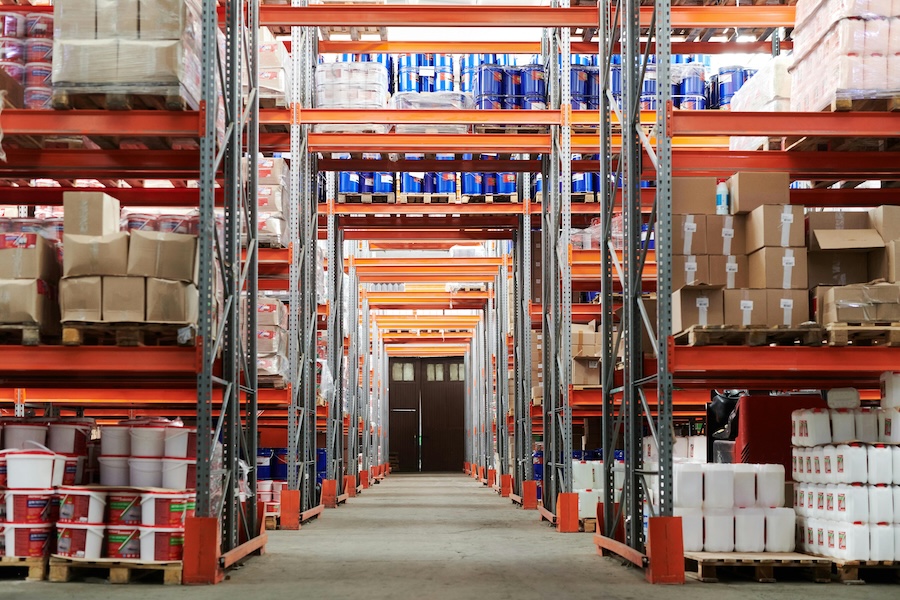
Regional warehousing can shorten delivery times, improve customer experience, and support marketplace operations across multiple countries.
However, poorly coordinated expansion can create duplicated inventory, higher storage costs, and unnecessary working-capital requirements.
A scalable supply chain therefore needs visibility across supplier selection, manufacturing, freight, warehousing, fulfillment, and final distribution.
Furthermore, businesses should review supplier performance as order volumes, product requirements, and target markets evolve.
Teams can track quality consistency, lead times, responsiveness, defect rates, pricing stability, and corrective actions.
These measurements make future purchasing decisions more objective and reduce dependence on informal supplier relationships.
Since 2016, PT Exim Jaya Abadi and PT Kalimas Mitra Perkasa have supported AsiaCommerce's cross-border supply chain operations.
Want to discuss how to source products from China for your business?
AsiaCommerce: Cross-Border Supply Chain Enabler for Southeast Asia
0 Comments