
ASIACOMMERCE — The Southeast Asian market has evolved into a global economic powerhouse.
This transformation presents an irresistible frontier for international business owners.
With a rapidly growing middle class and a combined GDP surpassing trillions, the region's appetite for high-quality commodities is skyrocketing.
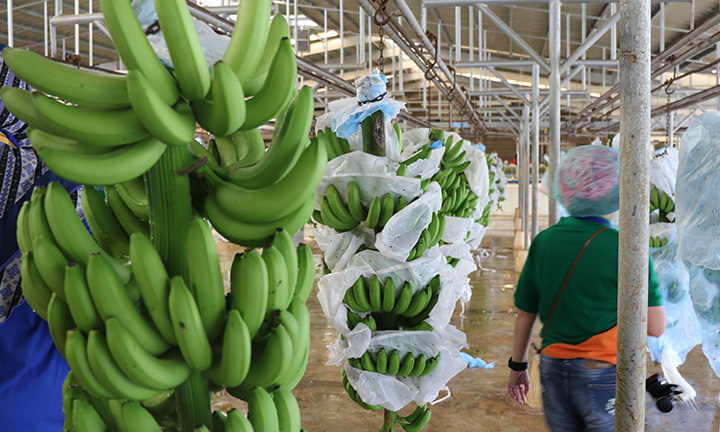
Among these, the Philippine banana industry stands as a titan.
(RELATED CONTENT: The C-Beauty Explosion: How Chinese Brands Mastered the Southeast Asian Market (And You Can Too))As the world’s second-largest exporter, the Philippines offers a diverse portfolio of banana varieties ranging from the logistics-friendly Cavendish to the premium Senorita.
These selections are currently reshaping global F&B supply chains in 2026.
The Gold Standard: Identifying the Right Philippine Banana for Your Export
Success in the fruit trade begins with choosing the right product for your specific market niche.
The Philippines offers a unique spectrum of bananas, each serving a distinct commercial purpose:
- Cavendish (The Global Workhorse): Accounting for 53% of national production, this is the undisputed king of export. Its thick skin makes it incredibly resilient for long-haul maritime shipping to Europe, North America, and the Middle East.
- Saba Banana (The Industrial Powerhouse): Unlike the sweet dessert varieties, the Saba is robust and "square-shaped." It is the primary ingredient for the booming global banana chip industry, making it ideal for food manufacturers.
- Lakatan & Latundan (The Premium Niche): These are the "gourmet" choices. With intense aromatic sweetness and a vibrant orange-yellow hue, they command high prices in luxury supermarkets, though they require sophisticated cold-chain management.
- Lady Finger (Senorita): These bite-sized "honey bananas" are a hit in the healthy snack sector and high-end hospitality, offering a unique value proposition for boutique importers.
The Southeast Asian Trade Paradox: Massive Opportunity, Complex Barriers
While the demand within ASEAN is undeniable, entering this market is far from a "click-and-ship" process.
(RELATED CONTENT: The ASEAN Goldmine: How to Enter Southeast Asia’s Massive Market Without a Local Entity)Global exporters often underestimate the stringent regulatory landscape of Southeast Asia.
Each member state maintains rigorous Sanitary and Phytosanitary (SPS) measures to protect local ecosystems from transnational pests.
To successfully land cargo in major hubs like Jakarta, Singapore, or Manila, businesses must navigate a labyrinth of mandatory documentation.
This documentation includes the Phytosanitary Certificate (PC) from the origin country and the SPS Import Clearances (SPSIC).
Additionally, businesses must navigate complex Customs Valuation based on specific HS Codes.
A single error in a Bill of Lading or a missing stamp on a Certificate of Origin can lead to catastrophic delays, resulting in spoiled inventory and massive fines at the port.
(RELATED CONTENT: 7 Trending Asian Skincare Brands to Source in 2026: Navigate Global Trade Compliance Like a Pro)Eliminating the Logistics Headache
For a global business owner, managing these bureaucratic hurdles while trying to scale operations is a recipe for burnout.
The reality of international trade—especially for fresh produce or regulated goods—is that "gray area" procurement is a gamble that eventually leads to total loss.
This is where strategic partnership becomes the ultimate competitive advantage.
By leveraging established networks in production hubs like Davao, Mindanao, and utilizing professional procurement services, global entities can bypass the trial-and-error phase of expansion.
Your Strategic Gateway: Seamlessly Entering the Southeast Asian Market
Expanding your business into the vibrant Southeast Asian market shouldn't be a gamble.
We understand the pain points: the fear of cargo being seized by Customs, the confusion over shifting SPS regulations, and the struggle to find suppliers who actually meet global quality standards.
Whether you are sourcing fresh F&B products requiring Horticulture Quotas, or industrial machinery needing complex certifications, AsiaCommerce is your boots-on-the-ground partner.
We remove the "complexity" from the equation.
From verifying suppliers in the Philippines to managing the entire "Door-to-Door" logistics chain with full legal compliance, we ensure your investment is protected.
Stop losing sleep over bureaucracy and start focusing on your growth.
Consult with our expert team for free today and discover how we can streamline your global trade operations.
Consult with AsiaCommerce on WhatsApp
Stay ahead of market trends by following our social media and visiting the official AsiaCommerce website for the latest insights in global trade. (*)
AsiaCommerce: Anti-Hassle Export-Import Solutions, Guaranteed Secure.
0 Comments