
By AsiaCommerce Market Entry & Distribution Team
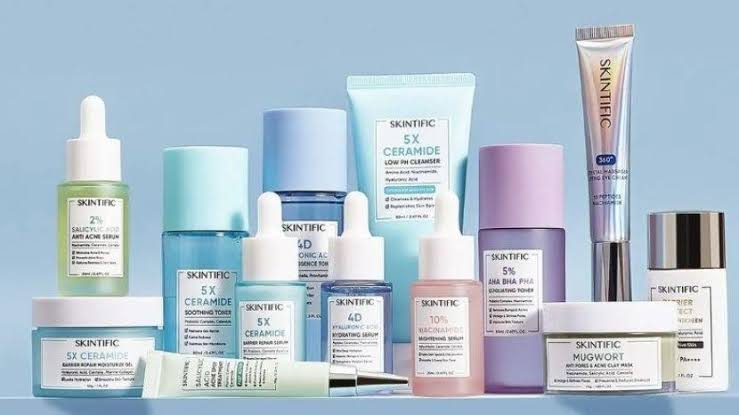
ASIACOMMERCE - Few beauty brands in Indonesia trigger the same question as Skintific: where does this brand actually come from?
Shoppers have guessed Canada, Norway, and even Indonesia.
The question matters to more than curious consumers.
Searches about the Skintific brand origin reflect a bigger business story about how foreign brands win Indonesia.
Skintific grew from a 2021 launch into one of Indonesia's top online skincare brands within a few years.
For any foreign beauty brand eyeing Indonesia, that path holds useful lessons.
Skintific's origin matters less than how deliberately it was built for one market, and foreign brands can borrow that playbook without borrowing the confusion.
This article answers the origin question with public records, then breaks down what the brand did right and where its approach carries risk.
For the wider C-Beauty picture, see our guide to the China cosmetic brands shaping 2026.
So, Is Skintific Canadian or Chinese?
Public records point clearly to China.
Citing BPOM data, IDN Times identified the manufacturer as Guangdong Essence Daily Chemical, a Guangzhou contract manufacturer.
The same report named PT May Sun Yvan in Jakarta as the Indonesian licence holder.
It added that PT Meiyume Manufacturing produced some Skintific moisturisers in Indonesia from 2024.
Industry research firm TMO Group names Guangzhou Feimei Network Technology as the company behind the brand.
So where did Canada come from?
An academic study traces a heated 2023 online debate to a "Formulated in Canada" claim.
Many users on X saw that claim as misleading once the China link surfaced.
The South China Morning Post noted that the packaging carried "Made in the PRC" only in small print.
The brand's website, by contrast, did not mention where its products were made.
Popbela adds another twist, noting confusion with Skntific, an unrelated Canadian beauty retailer.
This pattern is not unique to Skintific.
(ALSO READ: Flower Knows, Judydoll, Florasis: Which Chinese Makeup Brands Already Sell in Southeast Asia?)Euromonitor describes Chinese companies creating brands specifically for Southeast Asia that avoid overt associations with China.
It lists Skintific among those market-specific brands, alongside Focallure and O.TWO.O.
How Big Skintific Has Become in Indonesia
The origin debate has not slowed the brand down.
Magpie IQ ranked Skintific third in Indonesian online skincare sales for April to June 2026.
Only Glad2Glow and Wardah ranked higher across the major marketplaces it tracks.
The same data put Indonesia's online skincare market at about US$238 million for that quarter.
On Shopee, Compas placed Skintific second in beauty bundles for the same period, with a 4.26% share.
Brand awareness is high as well.
In a Populix survey from November 2025, 85% of respondents knew Skintific, GoodStats reported.
Wardah, a long-established local leader, scored 96%.
Reaching that level in roughly four years shows how quickly a well-planned entry can scale in Indonesia.
The market also remains open to newcomers.
Magpie IQ estimated that the top five skincare brands held only about 22% of online sales combined.
A fragmented market like this rewards brands that pick a clear problem and own it.
The Playbook: Built for One Market First
Skintific did not export a Chinese product line and hope it would sell.
It assembled each part of its entry around Indonesian shoppers.
| What Skintific did | Why it worked | Question for your brand |
|---|---|---|
| Led with skin barrier repair and tropical-climate needs | Solved a clear problem shoppers already searched for | Which local skin concern does your hero product solve? |
| Worked through a local licence holder | Gave products a legal route to market | Who will hold your product notifications? |
| Added local production for some products | Brought part of the supply chain closer to the market | Does local manufacturing fit your cost and timeline? |
| Used a familiar Indonesian face and many local creators | Built trust through voices shoppers recognised | Who will explain your product in local terms? |
| Priced affordably, but above cheap white-label products | Felt credible without feeling expensive | Where does your price sit against local leaders? |
The licence holder deserves particular attention.
(ALSO READ: Want to Distribute a Viral Chinese Makeup Brand? Start With the Rights, Not the Order)In Indonesia, the company holding product notification controls the legal route for every shipment.
Skintific's arrangement with PT May Sun Yvan gave the brand that local anchor from the start.
According to TMO Group, Skintific products mostly sold for RMB 40 to 60, roughly US$6 to US$8.5.
The brand also invested heavily in TikTok content, creator partnerships, and live selling.
It named actor Nicholas Saputra as an ambassador for its barrier repair line.
The academic study also found that many shoppers stayed satisfied because the products worked on their skin.
Product results, in other words, carried more weight than the label on the box.
None of these moves depends on where the brand comes from.
Each one depends on understanding a specific market before scaling.
Where the Playbook Gets Risky
The same approach that fuelled growth also created a trust problem.
When shoppers discovered the China link, part of the online community felt misled rather than surprised.
The academic study found many still liked the products, yet the origin claim damaged trust.
The South China Morning Post found another pressure point.
Some Indonesian and Malaysian shoppers it interviewed hesitated because full halal certification was still pending at the time.
For a Muslim-majority market, that concern can weigh more heavily than country of origin.
The lesson for foreign brands is straightforward.
Localise the product, the partners, and the voice, but keep origin and certification claims accurate.
A "formulated in" claim, for example, should match what the brand can document if regulators or journalists ask.
Manufacturing country, halal status, and the local licence holder are all visible to anyone who checks public records.
Transparency costs little at launch and protects the brand once it becomes popular enough to attract scrutiny.
Indonesia's halal rules deserve early planning too, as our guide on BPOM, halal, and market entry requirements for Chinese cosmetics explains.
Taking the Playbook Beyond Indonesia
Indonesia served as Skintific's launchpad, not its limit.
TMO Group reports that the brand became a TikTok Shop sales champion in both Indonesia and Malaysia.
It also estimated cumulative Southeast Asian sales above RMB 800 million within the brand's first two years.
(ALSO READ: Mau Order Banyak dari Taobao? Jangan Biarkan Prosesnya Berantakan)TMO also highlights local warehousing and localised social media management in its overseas markets.
Expansion still required country-specific work.
Each market brings its own regulator, notification holder, retail partners, and consumer expectations.
Our article on launching a cosmetics brand across Indonesia, Malaysia, and the Philippines covers what changes at each border.
For a foreign brand, the takeaway is to win one market properly before copying the model elsewhere.
If you are weighing Indonesia first, our analysis of whether Chinese cosmetic brands should enter Indonesia offers useful context.
AsiaCommerce has supported cross-border sourcing and Southeast Asian market expansion since 2016 through PT Exim Jaya Abadi and PT Kalimas Mitra Perkasa.
Depending on project requirements, our team can coordinate market entry, import arrangements, and e-commerce distribution in Indonesia, Malaysia, and the Philippines.
If your brand is planning its own Indonesian entry, a short discussion can map the route before launch.
Discuss Your Beauty Brand's Indonesia Market Entry
AsiaCommerce: Cross-Border Supply Chain Enabler for Southeast Asia
0 Comments